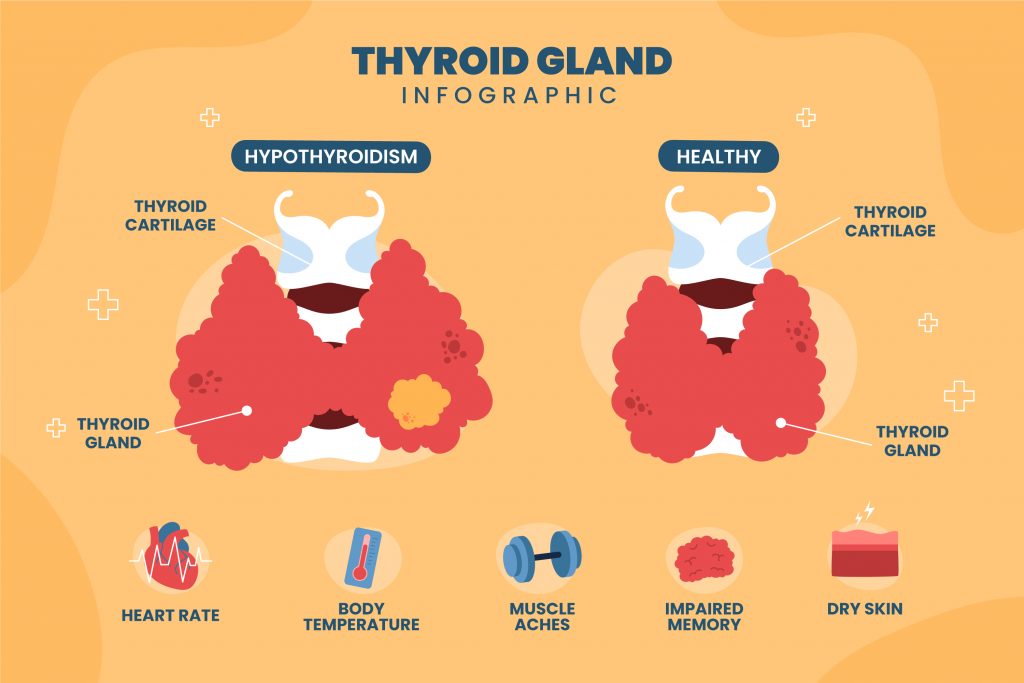
Hypothyroidism occurs when the thyroid gland doesn't produce enough hormones.
Causes
There can be many causes of hypothyroid:
- Hashimoto disease
- Surgical removal of the thyroid gland
- If infants were born with congenital hypothyroidism
- Radiation therapy to the neck area.
- Radioactive iodine
- Use of certain medications. Certain medicines to treat heart problems, psychiatric conditions, and cancer can sometimes affect the production of thyroid hormone. These include amiodarone (Cordarone), lithium, interferon alpha, and interleukin-2.
- Thyroid surgery
- Too little iodine in the diet.
- Stress
Symptoms
If thyroid hormones are not produced adequately, symptoms like cold intolerance, constipation, fatigue, weight gain, dry skin, goiter and even depression can occur.
Foods to be avoided during Hypothyroidism
Certain foods can inhibit your body's ability to produce or to absorb the replacement hormones you may take as part of your thyroid treatment.
- Soy: The hormone estrogen caninterfere with body’s ability to produce thyroid hormone. Soy is loaded with plant-based phytoestrogen, and may increase a person's risk for hypothyroidism.
- Cruciferous Vegetables: Cruciferous vegetables can interfere with the production of thyroid hormone, particularly people who have an iodine deficiency as these vegetables block the thyroid's ability to absorb iodine, which is essential for normal thyroid function.These vegetables include broccoli, Brussels sprouts, cabbage, cauliflower, kale, turnips, and bok choy. Cooking the vegetables can reduce the effect that cruciferous vegetables have on the thyroid gland.
- Gluten: People with hypothyroidism should minimize their intake of Gluten can irritate the small intestine and may hamper absorption of thyroid hormone replacement medication. Gluten is a protein found in wheat, barley, rye, and other grains. However, if you do choose to eat gluten, be sure to choose whole-grains varieties of bread, pasta, and rice, which are high in fiber and other nutrients and can help improve bowel irregularity, a common symptom of hypothyroidism. Take your hypothyroidism medication several hours before or after eating high-fiber foods to prevent them from interfering with the absorption of synthetic thyroid hormone.
- Fatty Foods: Fats disrupt the body's ability to produce and/or to absorb thyroid hormone replacement medicines. Cut out all fried foods and fats from sources such as butter, mayonnaise, margarine, and fatty cuts of meat.
- Sugary Foods: Hypothyroidism can cause the body'smetabolism to slow down. That means it's easy to put on pounds. Reduce the amount of sugar you eat because it's a lot of calories with no nutrients.
- Processed food: Processed foods tend to have a lot of sodium, and people with hypothyroidism should avoid sodium as underactive thyroidincreases the risk for high blood pressure, and too much sodium further increases this risk. Read the labels on food items to find options lowest in sodium.
- Caffiene: Caffeine blocks absorption of thyroid hormone replacement. Take your medication with water. You should wait at least 30 minutes after taking your medication for having your cup of tea or coffee.
- Alcohol: Alcohol have atoxic effect on the thyroid gland. It reduces the ability of gland to produce hormone and suppresses the ability of the body to use thyroid hormone. People with hypothyroidism should cut out alcohol completely or drink in moderation.
- Goitrogenic Chemicals: These chemicals, when ingested through processed food or medications can cause goiter:
-
- Amiodarone
- Lithium
- Oxazolidines
- Iopanoic acid
- Minocycline (MN)
- Propylthiouracil
- Thioureylene
- Sulfadimethoxine
- Carbamazepine
- Phenobarbitone
Things which help to alleviate symptoms of thyroid
- Maintain a Healthy Body Weight: Overweight people need more thyroid hormone. Obese people with borderline thyroid function may see improvements in thyroid function after weight loss. Obesity also significantly increases the risk for thyroid cancer.
- Manage stress: Stress can increase resistance of thyroid receptor cells to thyroid hormone and weaken the immune system.
- Exercise: Exercises keeps you physically healthy and also to lower stress. Running/jogging, yoga and meditation may help to ease stress.
Supplementation
Specific nutrients that may be beneficial for hypothyroidism:
Iodine: You need an adequate supply of iodine to make thyroid hormone. Good food sources include milk, cheese, poultry, eggs, kelp and other seaweeds. But iodine supplementation should be taken under doctor advice as too much can actually cause hypothyroidism.
Vitamin B: B vitamins have many interactions with thyroid function and hormone regulation. It’s best to take a nutritional supplement that includes the entire vitamin B complex. Good food sources of vitamin B include whole grains, legumes, nuts, milk, yogurt, meat, fish, eggs, seeds, and dark leafy greens.
Selenium: Selenium supports efficient thyroid synthesis and metabolism. Foods that provide selenium include tuna, shrimp, salmon, sardines, scallops, lamb, chicken, beef, turkey, eggs, and shitake mushrooms. You can take 100 to 200 micrograms of selenium in supplement form per day.
Zinc: Zinc plays a role in the conversion of the thyroid hormone T4 to T3. Food sources of zinc include shellfish, mollusks, meat, legumes, and nuts. You can take 30 milligrams of zinc supplementation.
Tyrosine: Tyrosine is an amino acid involved in thyroid hormone production and conversion so make sure you’re getting enough protein in your diet. Aim for 10 to 35 percent of your calories from protein each day.
Vitamin D: People having hypothyroidism tend to have vitamin D deficiency. Good sources of vitamin D are fatty fish, mushrooms, egg yolk, fortified milk and orange juice. But food sources of vitamin D are often not adequate. Vitamin D supplementation for those who are deficient is helpful. Dosage should be decided by doctor according to your need.
A healthy diet can go a long way with hypothyroidism. “Eat an anti-inflammatory diet full of lots of fruits and vegetables and unprocessed foods.